

Candidates Know Your Brand. Do They Know Your Jobs?
A candidate recognizes your company on a career fair announcement. They have bought your products or used your services for years. But when they think about their next job, your company barely crosses their mind.
They may associate your business with the employees they encounter as customers. The other teams behind those products and services are less visible.
A career fair gives your recruiters a chance to introduce that work. Candidates can ask questions, explain their experience, and learn about opportunities they might have overlooked. For participating employers, the preparation starts with deciding what you want people to understand about working for your company.
Introduce the teams behind the brand
Your company overview provides useful context. At a career fair, candidates also need to understand where their skills could fit.
Review the introduction your representatives plan to use. How much explains the business, and how much explains the work available within it?
Prepare a short description of the teams you are representing. Name their functions and explain what they do in everyday language. “Our payroll team processes employee pay and resolves discrepancies” gives candidates more to work with than “We offer exciting corporate opportunities.”
Our guide to employer branding explores how people perceive your company as a place to work. At a career fair, you can build on that perception by helping candidates picture the responsibilities they could take on.
Share what you can confirm before the event
The information participating employers provide helps us introduce them to job seekers during our career fair promotion.
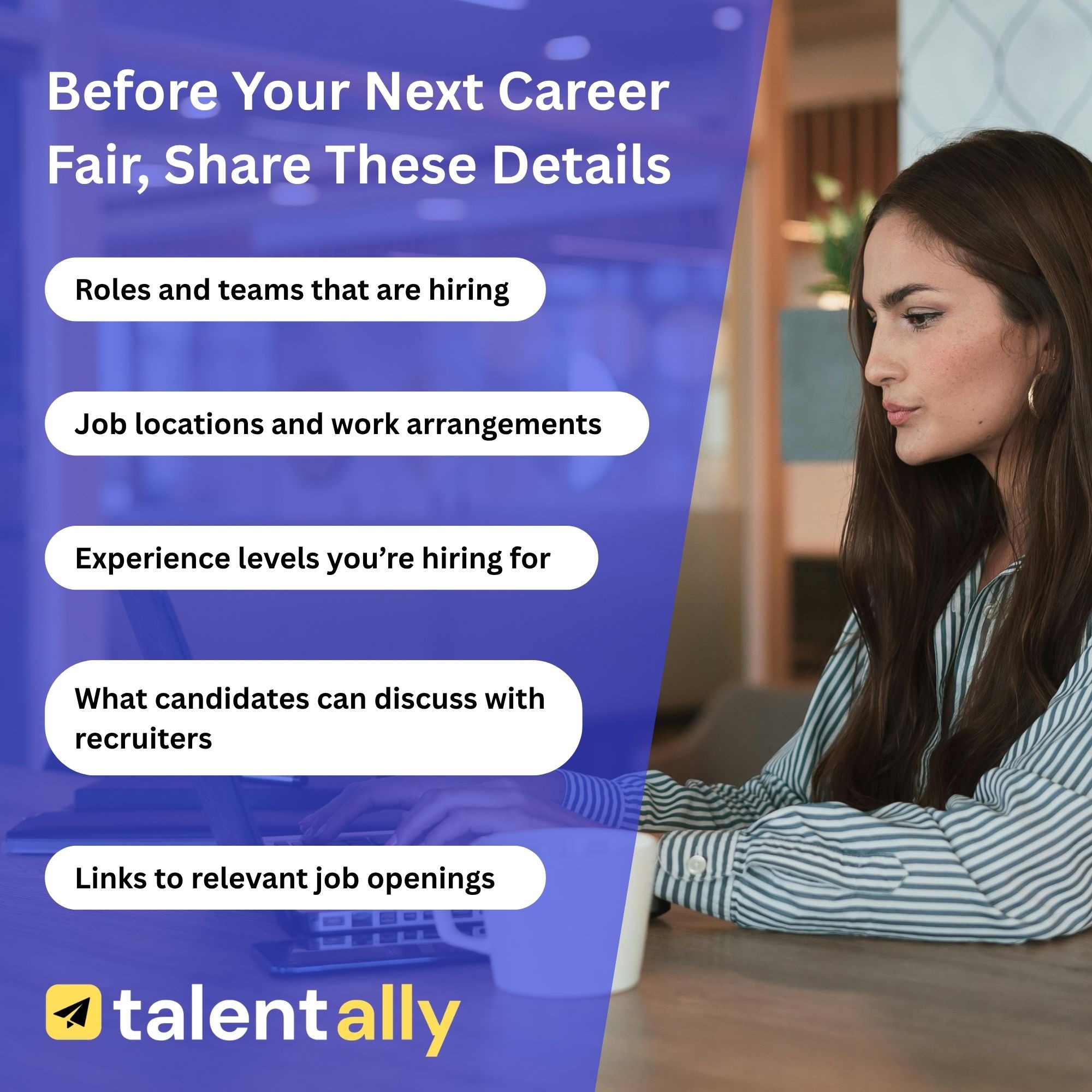
A complete list of openings may still be coming together when promotion begins. Share the details your team can confirm:
- The departments or teams your representatives cover
- The type of work those teams do
- Relevant locations and work arrangements, when confirmed
- The experience levels or backgrounds you are interested in
- What candidates can discuss with recruiters at the fair
If specific openings are ready to share, include their titles and links. Otherwise, a short description of the participating teams gives us useful context beyond the company name.
Keep that information tied to the event. A broad overview of your organization can suggest opportunities that the attending recruiters will be unable to discuss. A focused description helps candidates understand what they can learn by meeting your team.
Prepare representatives to explain the opportunities
Before the fair, agree on which teams and roles your representatives will cover. Make sure everyone has the same current information.
For confirmed openings, prepare answers to the questions candidates need to assess their interest: What would I do? Where would I work? What experience matters? What does the hiring process involve?
Be ready to explain which qualifications are essential and which skills someone can develop after joining. This gives recruiters something useful to discuss with candidates whose experience comes from another industry.
Also decide how to respond to questions outside the attending team’s area. If someone asks about a department you do not represent, an accurate explanation and a relevant contact or resource, where available, are more helpful than an uncertain answer.
If your team is meeting candidates for future hiring needs, say that clearly. People should understand whether they are discussing an available position or learning about a possible career path.
Connect the work to the person in front of you
During the fair, use your introduction to open a conversation.
Ask what kind of work the candidate is looking for and which parts of their experience they hope to use. Then explain the opportunities that relate to their answer.
For a candidate interested in payroll, you might discuss whether the role centers on processing payments, investigating discrepancies, or maintaining payroll systems. Those responsibilities involve different interests and strengths, even when the job titles sound similar.
Give candidates room to ask about the practical details, too. Schedules, training, team responsibilities, and working arrangements can shape their decision as much as the company’s reputation.
The aim is to help each person understand enough about the work to decide whether they want to pursue it.
End with a next step they can use
Before a conversation ends, make the next step specific.
For a current opening, share the job title and application link. Explain any action the candidate needs to take after speaking with you. If the opportunity is still being finalized, explain where they can check for future openings without promising an application date.
After the event, compare notes with your representatives. Which departments surprised candidates? Which responsibilities needed more explanation? Were people expecting opportunities your team did not cover?
Use those questions to improve the information you provide for your next fair and the introductions your recruiters prepare. A candidate who arrived knowing your products should leave understanding something concrete about your work and where they might fit.
