
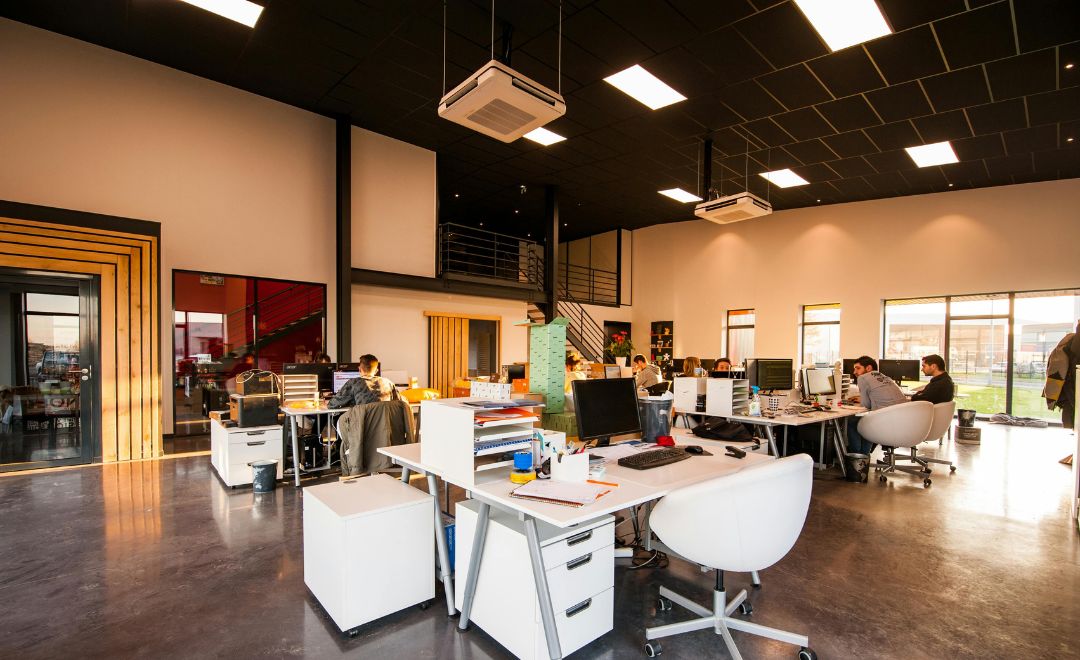
How to Stay Productive in a Noisy Office
You finally land the job, meet your team, sit down to work… and then it starts. Conversations nearby. A phone ringing. Someone reheating lunch in the microwave. Another coworker on a video call with no headphones.
Welcome to the modern office.
Open and collaborative workspaces are great for connection and learning, but they can also challenge your focus. The good news? You don’t have to wait for a quieter office to do great work. With the right habits, you can stay productive even when your environment isn’t.
Why Noise Feels So Mentally Exhausting
Your brain isn’t designed to ignore speech. It automatically tries to process language, even when you don’t want it to.
That’s why background chatter feels more distracting than steady sounds like air conditioning. Neuroscientists call this attentional competition: your brain keeps allocating mental energy to surrounding conversations instead of your task.
And it’s not just a feeling:
- 69% of employees say office noise hurts concentration and productivity
- Poor acoustic environments can reduce productivity by up to 15–20%
In other words, struggling to focus in a noisy office doesn’t mean you lack discipline. It means your brain is reacting exactly how it’s wired to.
Step 1: Build a “Focus Bubble”
You can’t control the office but you can control the signals your brain receives.
Try layering small focus tools instead of relying on just one:
Sound strategies
- Instrumental music or ambient sound (lyrics are more distracting)
- White noise or rain sounds
- Consistent background audio instead of silence
Why this works: unpredictable speech grabs attention, but steady sound masks it. Even moderate noise masking can reduce distraction.
Visual strategies
- Turn slightly away from walkways
- Lower your chair height to block motion in your peripheral vision
- Keep only current task items on your desk
Your brain tracks movement automatically. Removing visual interruptions reduces mental switching.
Step 2: Work in Energy Cycles, Not Endless Hours
Noise drains focus faster. So instead of fighting it all day, structure your effort.
Try the 90 minute rhythm:
- Deep focus (60–90 minutes)
- Short break (5–10 minutes)
- Light tasks
- Repeat
When people work continuously in noisy environments, error rates climb at around 65 dB noise levels, typo mistakes increase by about 15%.
Short breaks reset attention and prevent frustration buildup.
Step 3: Match Task Type to Noise Level
Not every task needs silence.
| Best in Noise | Best in Quiet |
| Emails | Writing reports |
| Scheduling | Learning new systems |
| Admin tasks | Analysis & problem solving |
| Brainstorming | Interview prep |
Think of it like workout zones:
Noisy office = cardio
Quiet time = heavy lifting
If your office has quieter early hours, block them for thinking work and save lighter tasks for peak noise.
Step 4: Use Micro Boundaries (Without Being Awkward)
You don’t need to confront coworkers to protect your focus. Small signals work surprisingly well.
Low effort boundary ideas
- Headphones = “focus mode”
- Sticky note: “Working on deadline, will respond soon”
- Calendar blocks labeled “project time”
- Standing instead of sitting invites fewer interruptions
Research shows nearly 81% of employees say noise affects performance, yet simple coping signals significantly reduce disruptions.
You’re not being antisocial, you’re managing attention.
Step 5: Take Advantage of Quiet Pockets
Most offices have hidden calm moments:
- Early mornings
- Lunch hour
- Late afternoon
- Meeting times (when others leave)
Even 30 quiet minutes can produce more deep work than two distracted hours.
Treat quiet like a scarce resource, schedule your hardest tasks into it.
Step 6: Turn Noise Into a Career Skill
This is the surprising part: learning to focus in imperfect environments helps you long term.
Early career professionals rarely control their workspace right away. Being able to produce quality work despite distractions signals reliability, something managers notice quickly.
You’re not just surviving noise. You’re building adaptability.
Final Thoughts
Noisy offices are part of modern work, but they don’t have to control your performance. By shaping your sound environment, structuring focus cycles, matching tasks to energy, and using simple boundaries, you can stay productive without waiting for perfect conditions.
As you grow in your career, these habits become powerful professional skills, helping you succeed anywhere, not just in ideal workplaces.
TalentAlly supports job seekers at every stage by helping you explore opportunities, connect with employers, and access career resources that make navigating work life easier.
Keep building your skills, keep learning what helps you do your best work, and take your next job search step with confidence.
